
Industrial Air Compressor Installation Checklist
Go through this list before you order a compressor or schedule a shutdown. Fill in the gaps with your facility team, supplier and installer so everyone knows what’s included. For each item, record what is known, what still needs checking, and who’s doing it. Anything unknown becomes one of the survey tasks before the scope is final.
1. How much air, and how you’ll know it works
- Write down the flow you need at the lowest pressure your equipment can accept, how long peaks last, and what runs at the same time. Note whether figures are SCFM or ACFM. Keep measured use separate from expected growth.
- Write down shifts, how much the compressor runs, your backup plan, and what happens to production if the air goes down. Count dryer purge and leaks only once.
- Decide how dry the air must be (pressure dew point), the limits on particles and oil, which machines need the cleanest air, and where you’ll measure it at startup.
- Settle the controls: local start/stop, lead/lag between compressors, how a variable speed unit fits in, remote signals, who gets alarms, and who hooks it into plant systems.
If you don’t know your demand, get an assessment, rather than picking by horsepower.
2. Plan the electrical work
- Photograph the existing nameplate and write down the voltage, phase and frequency. Have your electrician confirm you have the capacity.
- Give the electrical designer the loads for the compressor, dryer, heaters and anything else. Confirm the starting method, motor and controller needs, and the manufacturer’s installation data.
- A qualified electrician decides wire, breakers, disconnects, grounding, short-circuit ratings and working clearances, under your local NEC and inspector’s rules.
- Put who handles permits, inspections and the electrical hookup in the scope. Don’t guess breaker or wire size from horsepower.
3. Space, access and heat rejection
- Measure doors and the path in, where it gets unloaded, rigging limits, the floor slab, and the space the compressor, dryer and tank will take.
- Leave the manufacturer’s service clearances, room to open panels and pull filters, and a way to get the equipment out later. Electrical clearance is separate.
- Note the room temperature, dust, fumes, weather exposure and anything corrosive. The outdoor temperature isn’t the temperature at the compressor inlet. Get the manufacturer’s heat rejection and ducting limits.
- Set up intake and exhaust so hot air doesn’t loop back in. Size ventilation for everything in the room, on the hottest days.
- Keep it away from hazards, and work out noise and any building or environmental reviews with the site team.
4. Dryers, condensate, piping and tanks
- Pick the dryer and filters for your flow, lowest pressure and hottest conditions. Write down the expected pressure drop and how they’ll be maintained.
- Show where tanks go, their ratings, supports, relief valves, drain access and shutoffs, and who handles any tank inspection or registration.
- Decide pipe material, ratings, connections, supports and expansion, and the pressure drop it’s sized for. Get the piping maker’s installation instructions.
- Plan shutoffs and a safe tie-in point. Make sure a bypass can’t send untreated air to a critical process by mistake.
- Pipe condensate from the compressor, tank, dryer and filters to proper collection or an oil-water separator. Check local disposal rules; oily condensate usually can’t go down a floor drain.
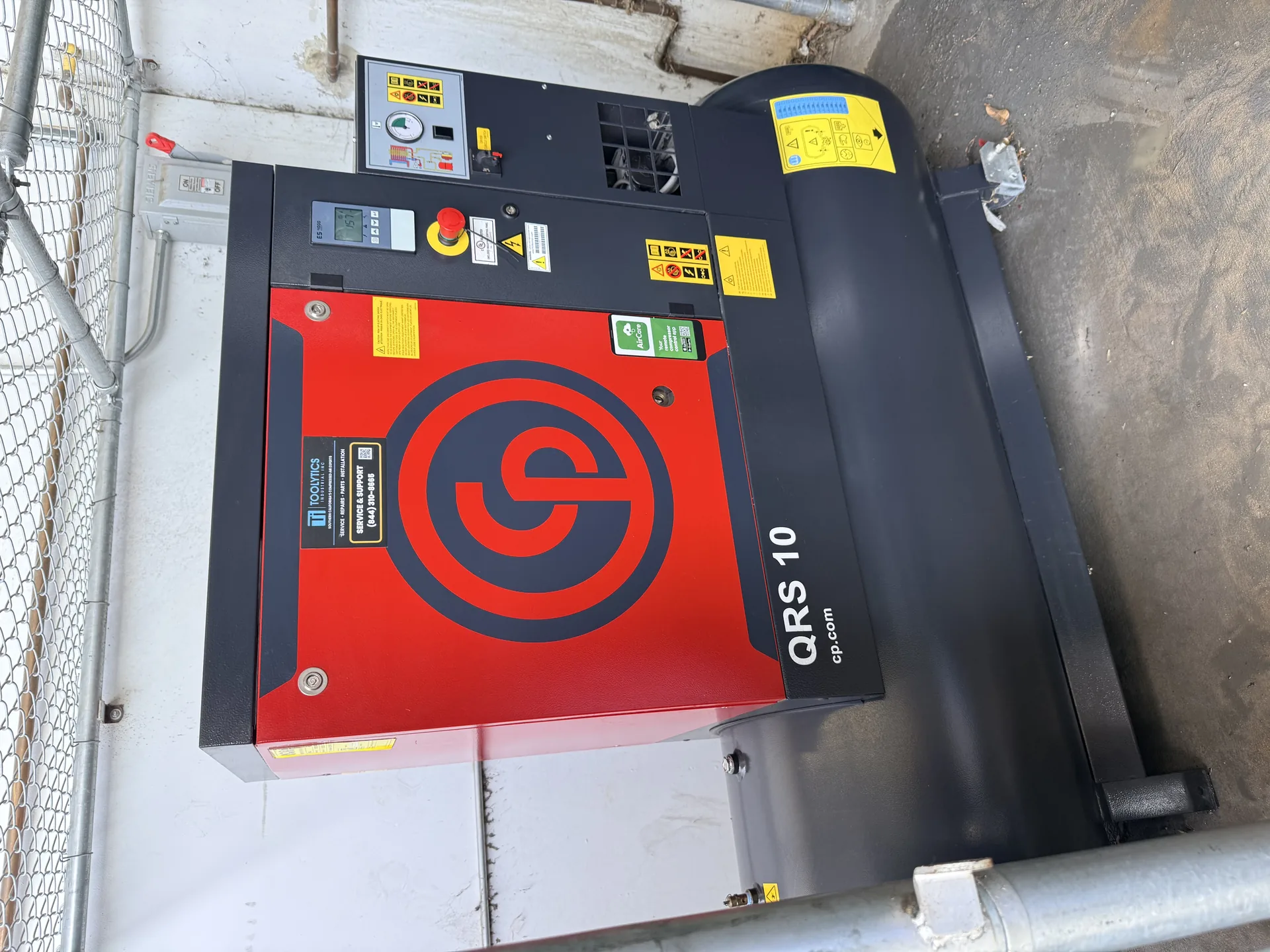
Compare dryers with the refrigerated versus desiccant selection guide. Detailed piping design is a separate job.
5. Shutdown and commissioning
- Name who approves the shutdown, does lockout, bleeds off pressure, arranges temporary air and restarts production. Set the work window and a backup plan if startup runs late.
- Before power goes on, qualified people complete the manufacturer’s pre-start check: installation, electrical, fluids, guards, connections and pressure parts.
- At startup, check rotation, pressure, controls, drains, leaks, ventilation and alarms against the manufacturer’s procedure.
- Record flow and pressure under the agreed load, the dryer’s pressure dew point, and pressure drop across the dryer and filters. Test backup, sequencing and interlocks if they’re in scope.
- Hand over the paperwork, manuals, settings, commissioning records and training, and agree who maintains it. List anything still open and get sign-off.
Turn the checklist into a quote request
Send the jobsite ZIP, current and planned equipment, the flow and pressure you need, electrical info, a layout or photos, your shutdown window, and whether you want equipment only or installed. Say what the owner, general contractor, electrician and Toolytics will each do. For government or prime-contractor work, include the solicitation spec and bid deadline with time zone.
Start with industrial compressor installation or equipment selection. This checklist helps you plan. The manufacturer’s manual, your site design and your local inspector have the final say.
Toolytics has a fully staffed Southern California operation and active Nevada equipment and service coverage. Arizona inquiries are for equipment supply and project-scoped services, with Powerex industrial authorization in California, Nevada and Arizona. Equipment brand and project eligibility are confirmed for the destination before quoting.
Common questions
What information is needed before quoting installation?
Site ZIP, the flow and pressure you need, how much it runs, electrical service, layout and access, dryer and filter needs, shutdown timing, and who supplies and installs what.
Can the checklist determine electrical wire and breaker sizes?
No. A qualified electrician has to size those from the equipment data, your local NEC and the inspector’s requirements.
What should commissioning document?
The agreed load and pressure, controls, how the dryer and filters perform, drains, ventilation, alarms, training, and anything needed for sign-off.
Further reading
Compressed Air Best Practices publishes manufacturer and industry perspectives on Atlas Copco piping and ventilation guidance, Sullair rotary screw operation in hot ambient conditions and CAGI installation planning for centrifugal compressors.
These are good general reading. Their centrifugal details, example numbers and savings figures aren’t rules for every site or results from our projects. Go by the manual and a proper site design for your equipment.
Sources
Checked October 22, 2026. For your project, go by the current data sheet and installation manual for the exact model.
Discuss your project requirements
Send your site ZIP and whatever requirements you have. We’ll tell you what fits. Call (844) 310-8665 or email [email protected].