
Compressed air treatment equipment

Industrial Air Dryers, Filtration & Compressed Air Treatment

Dryers, filters and condensate equipment to get water, oil and dirt out of your compressed air. We look at the whole system: pressure, temperature, flow and how clean the air needs to be.

Dryers, filters and drains work as one system.

Compressed air dryers for industrial systems

Water in the air damages tools, upsets controls and can ruin product. Pick a dryer by the pressure dew point you need, airflow, inlet temperature and working pressure, not just compressor horsepower.

General industrial moisture removal

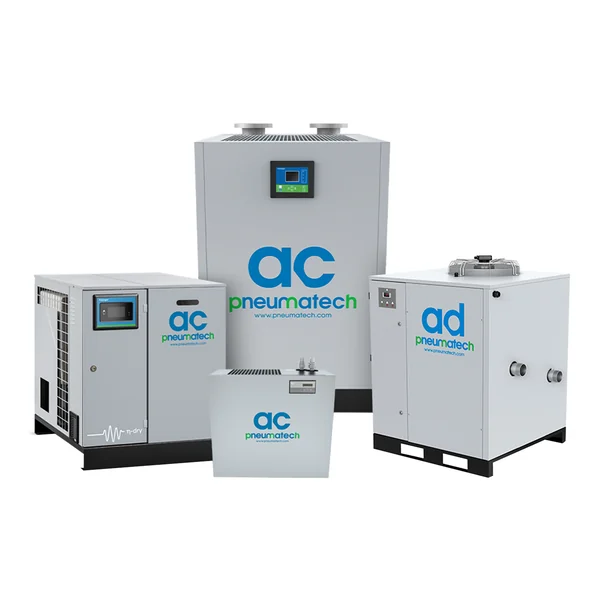
Refrigerated air dryers

Cool the air, condense the water and drain it off. A typical target is around +37°F / +3°C pressure dew point, but actual ratings and conditions vary by model.

Right for most indoor plant air that doesn’t need very dry air.

Request Refrigerated Dryer Pricing

Low pressure dew point applications

Desiccant air dryers

Desiccant beds soak up water vapor for very dry air, down to −40°F / −40°C or another target you need.

Heatless, heated and blower-purge designs differ in purge-air use, maintenance and energy. We size the whole package for your application.

Request Desiccant Dryer Pricing

Specialized or point-of-use

Membrane dryer options

Membrane dryers pull water vapor out through a membrane and can suit point-of-use or low-flow jobs. Results depend on inlet conditions, how much drying you need, purge use and pressure drop.

We’ll tell you whether membrane or another type fits.

Discuss a Membrane Dryer

Compressed air filters and separator elements

No one filter catches everything. We pick the right stages for water, dirt, oil aerosols and vapor based on your equipment and how clean the air needs to be at the point of use.

Particulate and coalescing filters

Particulate filters catch solids. Coalescing filters catch liquid aerosols like water and compressor oil, as long as bulk water is removed first. Where pre- and after-filters go depends on the dryer and the manufacturer’s instructions.

For replacements, send the housing or element model, rated flow, pressure and filter grade.

Replacement filters and service elements

Activated carbon and application-specific filtration

Activated carbon removes some vapors and odors when the filters ahead of it are right. It doesn’t replace a properly sized coalescing or particulate filter, and it doesn’t certify air for food contact, breathing or medical use.

Define how clean the air must be at the point of use and how you’ll check it.

Evaluate an air quality concern

Moisture separators, automatic drains and oil-water separators

Moisture separators

Remove bulk liquid water before it reaches the dryer and filters. Placement and size depend on your compressor, aftercooler, tank and dryer layout.

Automatic condensate drains

Float, timer and electronic demand drains dump collected water. Pick for reliability, easy service, air loss and how much condensate you make.

Oil-water separators

Clean oily condensate before disposal or discharge. What’s required depends on your site and local regulations; buying a separator alone doesn’t make you compliant.

Layout matters. A full setup might be a wet tank, separator, prefilter, dryer, afterfilter, dry tank and drains. That’s an example, not a universal diagram; your equipment instructions and site decide the order.

Request Condensate Equipment Pricing

Refrigerated vs. desiccant dryers: where to start

Use this to narrow down the type. We still check the exact pressure, inlet temperature, dew point and manufacturer correction factors for the dryer we quote.

Swipe or scroll the comparison table horizontally on small screens.

Selection factorRefrigerated dryerDesiccant dryer
Typical pressure dew pointNear +37°F / +3°C for many standard unitsLow pressure dew points such as −40°F / −40°C depending on model
Common fitGeneral indoor industrial air and moisture controlVery dry air requirements, some cold-exposed lines or sensitive processes
Energy considerationsRefrigeration/compressor and control energy; cycling technology may vary with loadRegeneration energy and/or purge-air losses depend on design
Upstream requirementsBulk water control and conditions within manufacturer limitsInlet water and oil aerosol prefiltration per OEM specification
Selection must verifyFlow corrections, inlet temperature, ambient temperature, pressure, power and dew pointDelivered flow, purge requirement, PDP, pressure drop, control system and filtration

Typical values for reference, not an ISO 8573-1 certification or a promise that your system meets a regulated standard.

How we size an industrial air treatment system

A dryer’s catalog CFM may not be what you get at your conditions, and how dry the air ends up matters as much as the flow.

  1. Establish air demand.

    How much air you use at what pressure, including peaks, future growth and backup equipment.

  2. Define air quality.

    Target dew point, acceptable dirt, oil and vapor, what each point of use needs, and how you’ll check it.

  3. Apply site conditions.

    Inlet and room temperature, elevation, line pressure, pressure drop, purge losses, power and where condensate goes.

Replacing an existing dryer or filter?

Send the model and serial number, compressor model, pressure, temperature, current dew point or water problem, and any maintenance records.

Air treatment preventive maintenance

Specifying a new system?

Send the compressor’s rated flow at your pressure, shifts, what the air is used for, tank layout, dryer location, filter level and timeline. Don’t know your demand? An assessment can measure it.

Compressed air system installation

Choose a dryer for your operating conditions

For dew point, corrected capacity, regeneration and running costs, see our refrigerated vs desiccant air dryer selection guide. For a recommendation, send how dry the air needs to be, peak flow, lowest pressure, inlet temperature and your ZIP.

Water in your compressed air? Start with the pattern.

Tell us where the water shows up and when it started. A dryer fault, changed conditions or a piping problem can look the same at the tool, and the pattern tells us whether you need service, an assessment or different equipment.

Water appears throughout the system

Note any dryer alarms, drain problems and recent maintenance or layout changes. A technician can check the separator, drains, bypass and dryer before recommending parts or a replacement.

The problem follows hot weather or added demand

Note when it happens compared with production load and room temperature. Ask for a capacity check using real inlet temperature, pressure and flow; nameplate capacity may not match those conditions.

Only one machine or branch is wet

Find the wet drop, hose and any cold piping or recently moved equipment. Compare the dryer outlet with that point of use. A local problem may need a piping change or point-of-use treatment, not a new plant dryer.

The display looks normal but the air is wet

Write down the reading, units, measurement pressure and sensor location. Ask for a check with a proper instrument and a calibration check. A steady display doesn’t prove dry air is reaching the process.

Pressure dew point is measured at a stated pressure. It’s the temperature where water starts condensing at that pressure. An atmospheric reading after the air expands isn’t the same as a line-pressure reading, so note where and at what pressure you measured.

Do not open pressurized equipment or change dryer controls to investigate. Leave internal checks, isolation and instruments to qualified service technicians following the equipment instructions.

To start, send the dryer model, ZIP, where the water is, when it happens, any alarm or reading, and whether production is affected. Add pressure, flow and temperature if you have them; unknowns can be measured in an assessment.

Further reading on dryer selection and moisture measurement

Compressed Air Best Practices: Selecting the Right Compressed Air Dryer, Fundamentals of Dew Point Measurement and Desiccant Air Dryer Control.

Where we supply and service air treatment

Our staffed team covers Los Angeles, Orange, Riverside and San Bernardino counties. We also supply equipment and do scheduled service in the Las Vegas metro. Arizona equipment requests and on-site work are quoted job by job.

Which manufacturers we quote depends on your site and region. We confirm dryer capacity, filters and condensate handling before quoting.

Get a quote on dryers, filtration or condensate equipment

Start with a short description. We’ll tell you what else we need before quoting a filter element, a single dryer or a full system.

Equipment-only purchasing

Send your ZIP, what you need or the application, any existing model, compressor CFM at PSI, voltage and how clean the air needs to be.

Request Equipment Pricing

Installation, retrofit or PM

Send the location, operating schedule, current compressor, dryer and tank layout, the problem, and any shutdown window.

Discuss Treatment Installation

Drawings or a long equipment schedule? Put a link in your request or tell us what you have, and we’ll set up a way to get the files. Please don’t send confidential or restricted plans through the form.

Common questions

What is the difference between refrigerated and desiccant air dryers?

Refrigerated dryers typically get to around +37°F pressure dew point. Desiccant dryers go much lower, with different purge-air and energy costs. Actual performance depends on the equipment and your site.

Should compressed air be filtered before or after the dryer?

Most systems have a prefilter before the dryer and an afterfilter after it, but the right setup depends on the dryer type, compressor oil carryover, how clean the air must be and the manufacturer’s instructions.

Can a refrigerated dryer stop liquid water in my compressed air lines?

A dryer that’s sized, installed and maintained right cuts moisture a lot. You can still get water from hot inlet air, an undersized dryer, failed drains, a bypass or conditions downstream, so look at the whole system.

Is an oil-water separator required?

Oily condensate has to be handled under your site’s discharge and disposal rules. An oil-water separator may be part of that, but your site’s requirements decide what’s needed.

Can Toolytics help replace a dryer without replacing my compressor?

Yes. We quote standalone dryers, filter elements and condensate equipment. Send the existing model and your real operating conditions.

Installing new treatment?

Check the compressor installation readiness checklist for room conditions, utilities, condensate routing and startup before you finalize the install.

Compare dryer operating requirements

Use the refrigerated versus desiccant dryer worksheet for corrected capacity, purge air and operating-cost comparisons.

Plan care for the complete air system

Dryer, drain and filter maintenance should be tracked with the wider air system. Use our maintenance planning guide to record component-specific tasks and service history.

Request a Quote

Need a dryer, filter or air treatment quote?

Tell us about your compressor, how clean and dry the air needs to be, and your flow and pressure, and we’ll quote options. Call (844) 310-8665 or email [email protected].


Msgs may include service updates, scheduling, and inquiry follow-ups from (844) 310-8665. Consent is not required to receive service. Msg & data rates may apply. Msg frequency varies. Reply STOP to opt out, HELP for help. We do not share mobile opt-in information for third-party marketing. Service providers may process it on our behalf. See our Privacy Policy & Messaging Terms.

We’ll follow up within one business day.