
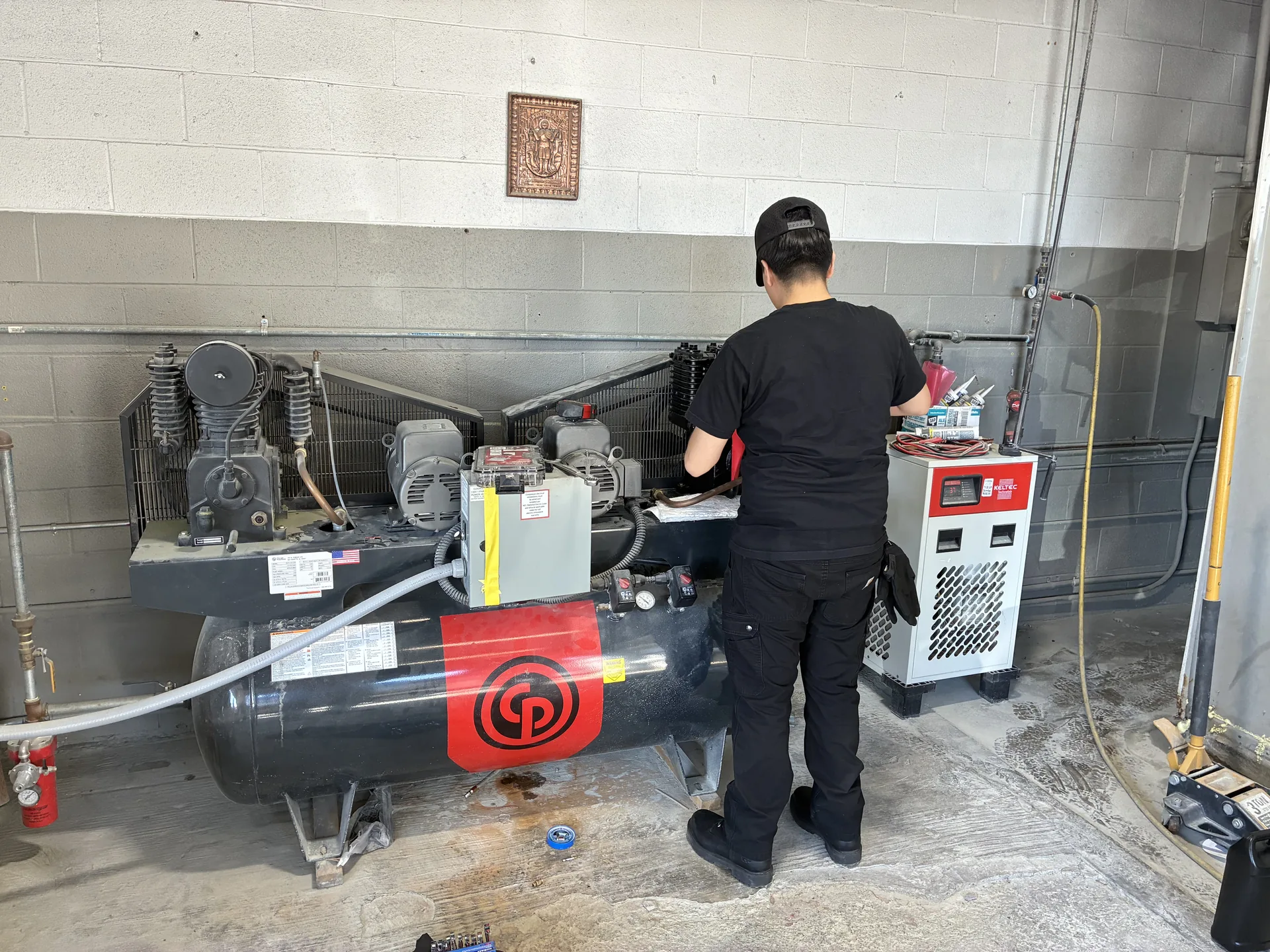
A fault in the compressor
Identify the damage and the work needed.
Request a repair estimateFind out what failed, what it will cost to fix, and whether the compressor still fits your operation. A breakdown alone does not mean you need a new machine.
Start with the cause
A worn belt, faulty valve or cooling problem is a different decision from a damaged airend, pump or motor. Start with a repair diagnosis and an itemized estimate.
If the compressor runs but your tools or machines are short of air, check leaks, clogged filters, dryers and piping restrictions. An air-system assessment can help find a pressure-loss or demand problem before you buy another compressor.
Compare the options
Use the diagnosis and the machine’s actual condition to compare these six factors. Age and running hours help tell the story; neither decides the answer on its own.
| What to compare | Repair may fit when… | Replacement may fit when… |
|---|---|---|
| Condition and hours | The fault is limited and the remaining components are sound. | Major damage affects several components or the rest of the machine is worn. |
| Repeat failures | A diagnosis identifies a fault that can be corrected. | Recurring failures make continued repair uncertain. Confirm the cause first. |
| Parts and support | Parts and service support are available for the repair. | Obsolete parts or repeated sourcing delays make future support difficult. |
| Downtime | The repair turnaround fits the shutdown you can tolerate. | Delivery, installation and startup can fit a planned equipment change. |
| Full cost | Repair costs less after allowing for upcoming major service and expected energy use. | Replacement has a lower total cost over the same period, including installation, energy and maintenance. |
| Air demand | The compressor still supplies the flow and pressure your operation needs. | Demand or operating hours have changed enough to warrant different equipment. |
Identify the damage and the work needed.
Request a repair estimateCheck demand, pressure loss and controls.
Request a system assessmentCompare equipment and the installation scope.
Request an equipment quoteThen compare energy, routine service and likely major work over the same period. Use your running hours, electricity rate and measured power where available. Any proposed energy savings need to reflect how your system actually operates.
Get the repair turnaround and the replacement delivery, installation and startup dates. Compare both with the shutdown time your operation can tolerate.
If you have a backup compressor, check that it can carry the required load with its dryer and filters. If temporary air is needed, confirm capacity, power, connections and availability before relying on it.
Do not replace horsepower with horsepower without checking demand. List the machines that run together, required pressure, operating hours and planned expansion. Check leaks and pressure loss first.
For air tools, the compressor sizing guide is a starting point. For a plant with changing loads or several compressors, discuss demand measurements and controls before choosing fixed-speed or variable-speed equipment.
After repair or replacement, keep up with preventive maintenance. CP owners can use our model-specific maintenance schedules.
Send the model, serial number, symptoms and running hours if available. Include your facility ZIP code, recent repair history and how long you can be without air. We can review the fault and discuss repair, system assessment or replacement as appropriate.
Already know what you need? Request a repair estimate Request a replacement quote